


FFs
Promoting
Farmer Field School
Learn&
Find Answers
Promoting Farmer Field School
Community-based Farmer Field School (FFS) experiments are an approach to strengthening agricultural knowledge and skills, particularly among farmers who are interested in improving their farming practices and developing more sustainable agricultural production.
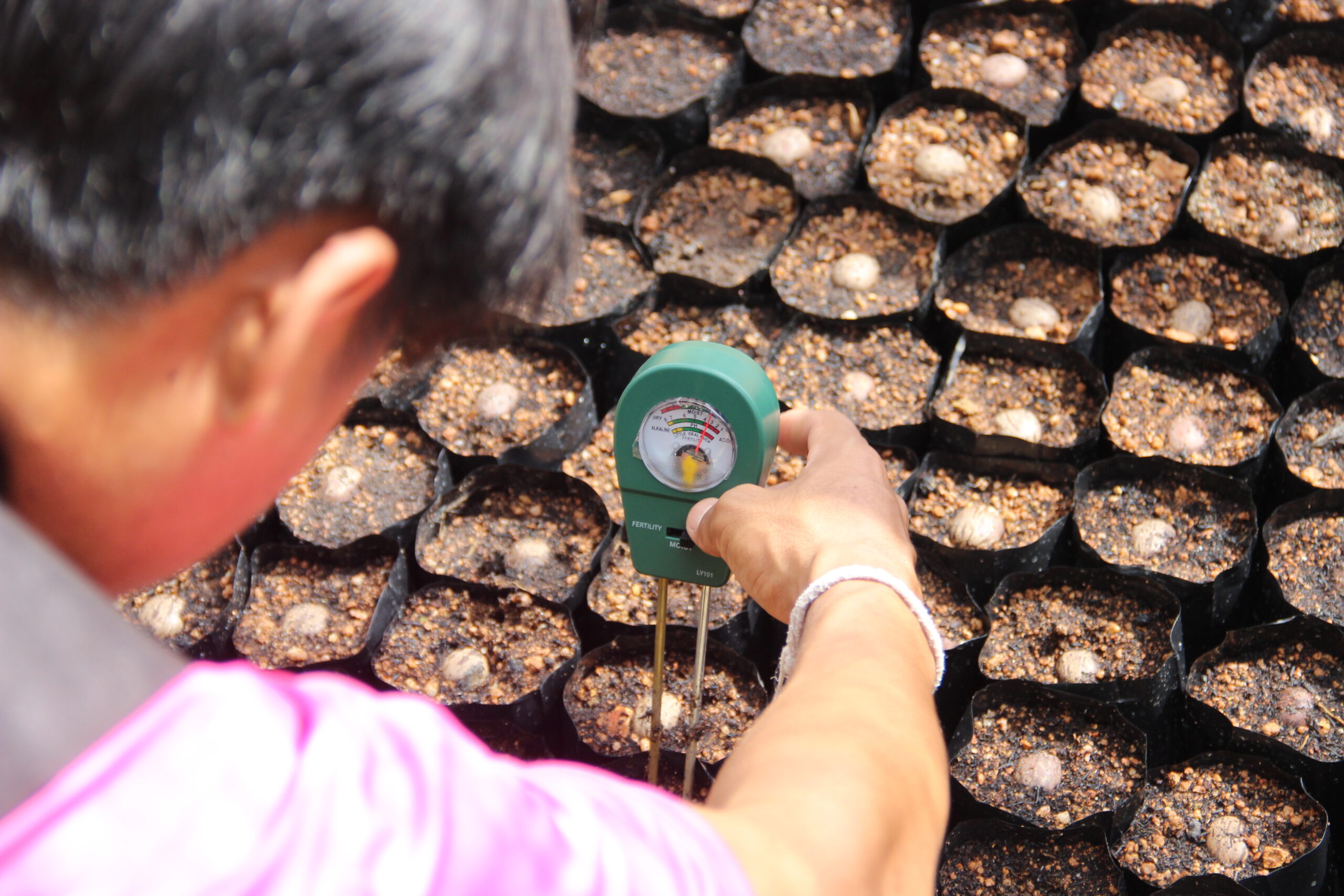
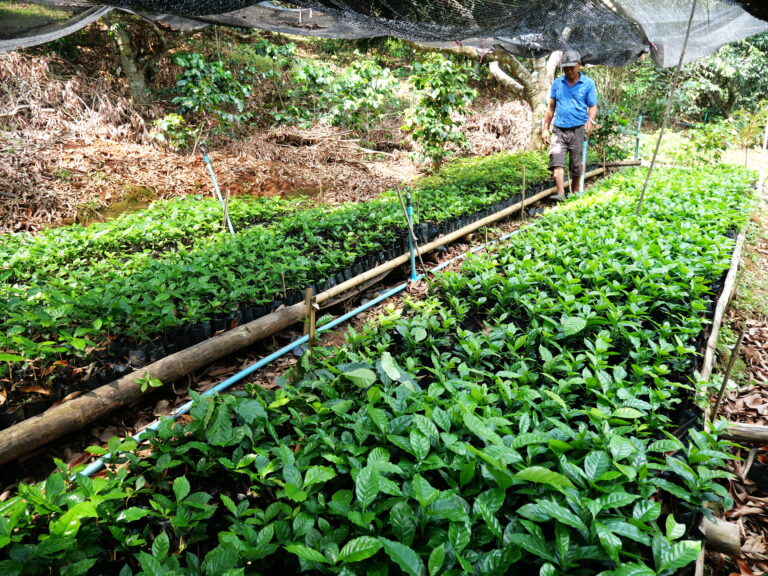
The Farmer Field School approach emphasizes participatory learning, where farmers conduct practical experiments to address challenges they encounter in their farming activities, such as pest management, soil improvement, plant propagation, and increasing crop productivity. Learning takes place through collaboration between farmers within the community and agricultural experts.
The topics for each experiment are based on the actual problems, challenges, and questions identified by farmers themselves, allowing them to learn through hands-on experience and find solutions that are appropriate to their local context.
The Benefits of Community-Based Farmer Field Schools Include:
1.Learning Through Practical Experience: Farmers learn by conducting hands-on experiments in their own fields, helping them better understand crop management, pest control, and agricultural techniques.
2.Building Agricultural Knowledge and Skills: Farmers gain new knowledge about cultivation methods and modern techniques, as well as practical solutions to challenges such as soil management, seed sowing, efficient water use, and pest management.
3.Promoting Sustainable and Environmentally Friendly Agriculture: Farmer Field Schools often emphasize organic farming practices and natural resource conservation, helping reduce the use of harmful chemicals and promote farming practices that maintain ecological balance.
4.Strengthening Community Networks and Solidarity: Working together through Farmer Field Schools helps build stronger relationships within the community and creates opportunities for farmers to share knowledge, experiences, and practical solutions.
5.Reducing Production Costs: Farmers can learn how to reduce the use of chemical pesticides and fertilizers and make better use of available resources, helping lower production costs and increase profits.
6.Improving Productivity and Income: Learning through practical experiments enables farmers to improve crop quality and productivity more effectively, which can lead to increased income in the long term.
7.Building Confidence and Ownership of Knowledge: Farmers gain greater confidence in their own abilities because they learn through experimentation and direct experience rather than relying solely on theoretical knowledge.
8.Promoting Self-Reliance: Farmers can learn to identify and solve problems in their own fields without always depending on external advisors, strengthening their ability to become self-reliant in the long term.